

Creating a wedding seating chart can feel like a complicated puzzle, especially when you are balancing family relationships, friendship groups, accessibility needs and venue restrictions.
A clear process makes the task much easier. This guide explains when to begin, how to organize a wedding table plan and which seating chart ideas work for different reception layouts.
Do You Need a Wedding Seating Chart?

A seating chart is strongly recommended for a seated meal, especially when guests select meals in advance or the venue provides table service.
Assigned seating helps:
- Guests find their places quickly
- Caterers deliver the correct meals
- Families and friendship groups sit comfortably
- The reception begin without unnecessary confusion
- Couples manage sensitive relationships discreetly
For a casual cocktail reception or buffet with plenty of open seating, assigned tables may not be necessary.
Seating Chart vs. Place Cards
A wedding seating chart tells guests which table they have been assigned. It is usually displayed near the reception entrance.
Place cards identify each guest’s individual seat at the table. They may also show meal choices or dietary information.
You can use:
- Assigned tables without assigned seats
- Assigned tables with place cards
- Fully open seating for an informal reception
Assigned tables are enough for many weddings. Formal dinners and events with preselected meals often benefit from individual place cards.
When to Create the Wedding Table Plan
Begin planning the layout four to six weeks before the wedding, once most RSVPs have arrived.
The chart should usually be finalized one to two weeks before the reception. Confirm the exact deadline with the venue, caterer and stationery supplier.
A practical timeline is:
- Six weeks before: Collect outstanding RSVPs and request the venue floor plan.
- Four weeks before: Create the first table groupings.
- Three weeks before: Review family and accessibility requirements.
- Two weeks before: Confirm the final layout with the venue.
- One week before: Print the seating chart and prepare place cards.
Leave a little flexibility for last-minute cancellations or substitutions.
Information to Collect Before You Start
Before placing names at tables, gather:
- Final guest list
- Table sizes and capacities
- Venue floor plan
- Location of doors and walkways
- Head table position
- Dance floor and stage location
- Dietary requirements
- Accessibility needs
- High-chair requirements
- Family or relationship conflicts
- Guests who may need to leave early
Without an accurate venue layout, it is difficult to create a realistic plan.
How to Make a Wedding Seating Chart
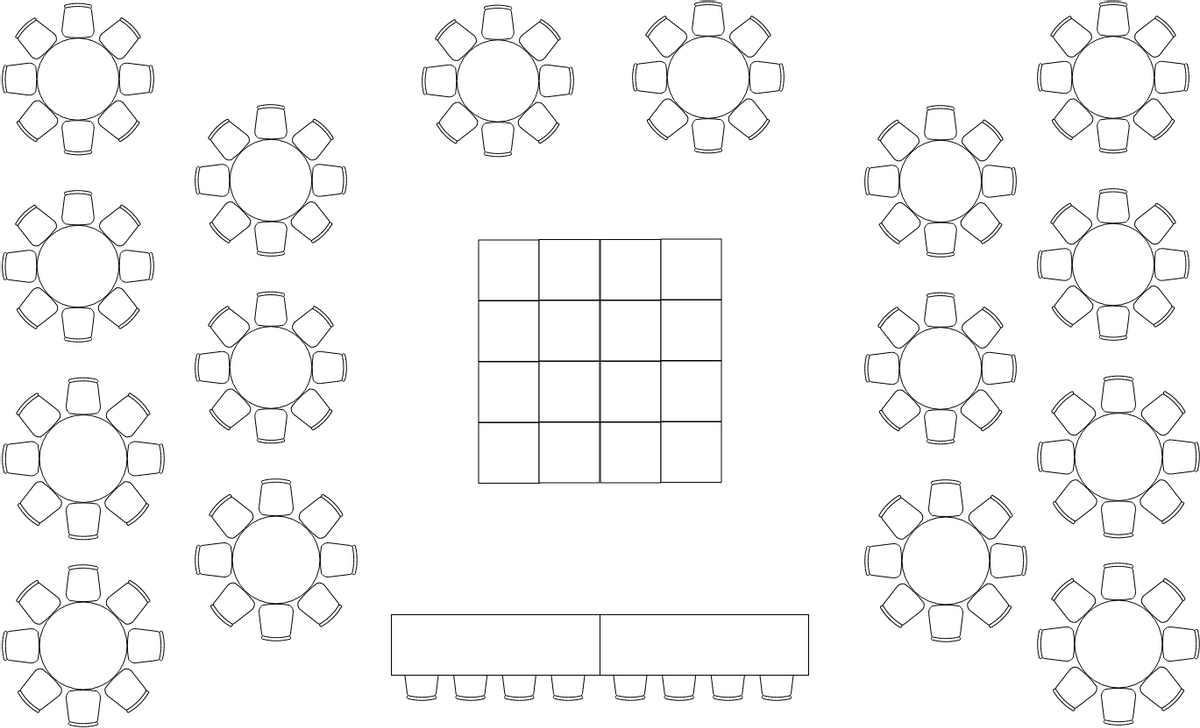
1. Confirm the Room Layout
Ask the venue for a floor plan showing table positions, maximum capacity, exits and service areas.
Do not place extra chairs at tables without approval. Overcrowded tables can make dining uncomfortable and restrict staff movement.
2. Choose the Couple’s Table
Common options include:
- Sweetheart table: Only the couple
- Traditional head table: Couple and wedding party seated on one side
- Family table: Couple seated with close relatives
- King’s table: Couple, wedding party and partners seated around a large table
A sweetheart table offers privacy, while a family or king’s table may feel more social.
3. Group Guests Naturally
Begin with broad social groups:
- Immediate family
- Extended family
- Wedding party
- School friends
- University friends
- Work colleagues
- Family friends
- Parents’ guests
These groups provide a starting point, but tables should not feel like rigid categories.
4. Build Balanced Tables
Place guests with people they already know or are likely to enjoy meeting. Shared interests, similar ages and compatible personalities can help create comfortable conversations.
Avoid creating one table entirely from guests who do not know anyone else unless they have clear common ground.
5. Review Special Requirements
Consider which guests need:
- Wheelchair-accessible seating
- Space for mobility aids
- Easy access to exits
- Distance from loudspeakers
- A high chair
- A quieter table
- Additional room for a service animal
Older guests may appreciate seating away from speakers but close enough to see speeches and formal dances.
6. Check the Entire Room
Review the complete plan rather than focusing on each table separately.
Make sure:
- No table exceeds capacity
- Key walkways remain clear
- Guests can see important moments
- Children are seated safely
- Divorced or estranged relatives have enough distance
- Vendors have suitable seating where required
Wedding Seating Chart Etiquette
Seat Couples Together
Married, engaged and long-term couples are normally seated together. Avoid separating partners simply to balance table numbers.
Keep Young Children With Their Parents
Young children should usually sit with their parents or guardians. A separate children’s table may work for older children who know one another and can manage without constant supervision.
Do Not Create an Obvious Singles Table
A table made entirely of single guests can feel forced. Mix single guests with friends, relatives or people who share similar interests.
Consider Family Relationships
Divorced parents can be seated at separate tables with relatives or friends who make them feel comfortable. There is no requirement to place all immediate family members together.
Seat the Wedding Party Thoughtfully
The wedding party does not need to sit at one traditional head table. They may prefer sitting with their partners, families or friends.
Place Parents Near the Couple
Parents are commonly seated close to the couple’s table, but the exact arrangement should reflect family relationships rather than tradition alone.
Avoid a “Least Important” Table
Tables near doors, kitchens or restrooms can feel less desirable. Avoid placing all distant relatives or less familiar guests in one inconvenient location.
Round, Rectangular or Long Tables?
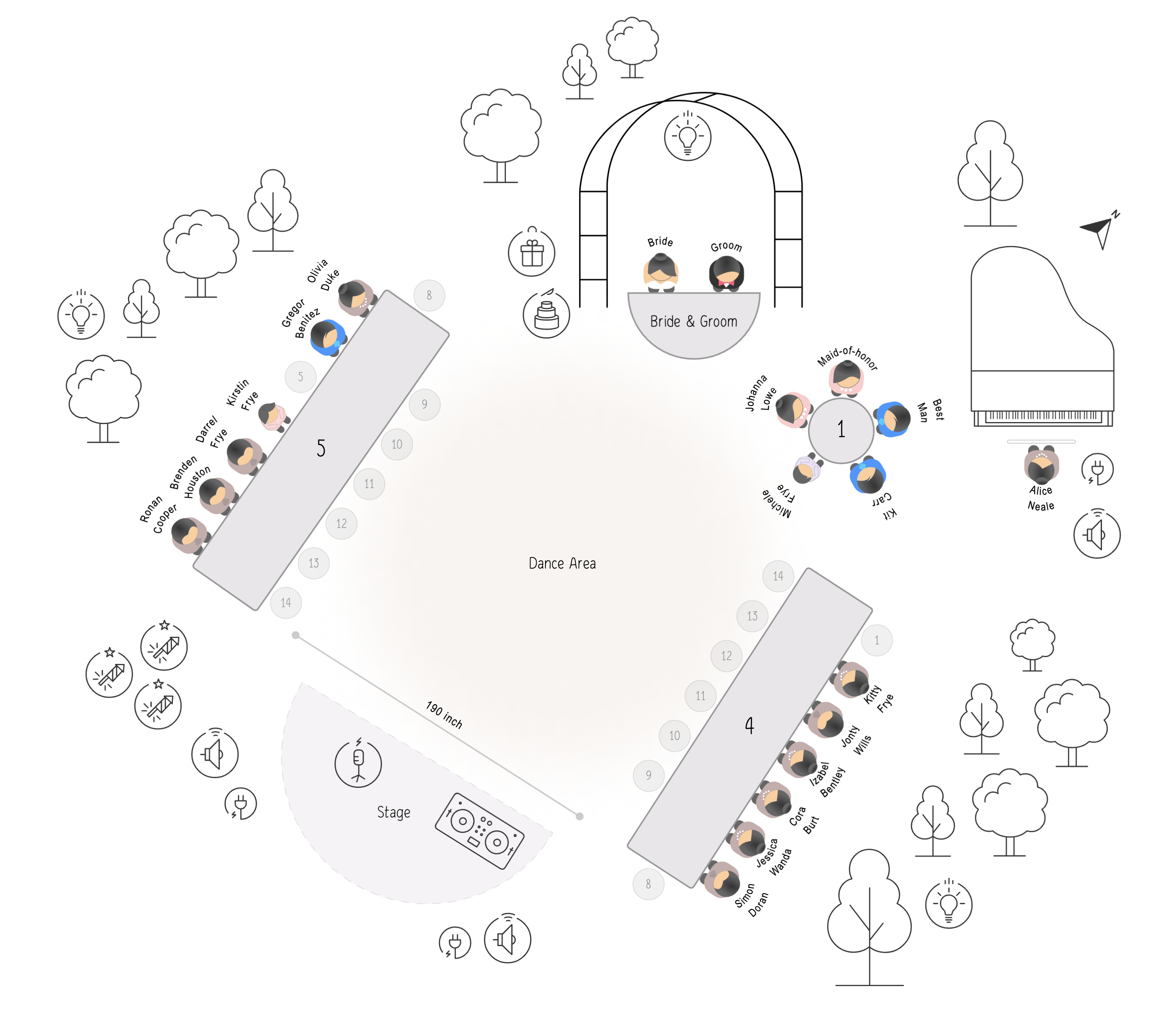
The table shape affects both capacity and conversation.
Round Tables
Round tables encourage conversation and work well for groups of approximately eight to ten guests. They are flexible but may require more floor space.
Rectangular Tables
Rectangular tables can create a structured, modern layout. Guests usually speak most easily with people beside and directly across from them.
Long Banquet Tables
Long tables create a communal atmosphere and suit rustic, outdoor and family-style receptions. However, guests may find it difficult to talk beyond their immediate neighbours.
Mixed Table Layouts
Combining round and rectangular tables can help accommodate the room shape and different group sizes. The layout should still look intentional and leave clear walkways.
Simple Wedding Seating Chart Template
Use a spreadsheet with one row per guest.
| Guest name | Group | Table | Meal | Notes |
| Emma Carter | Bride’s family | 2 | Chicken | Near exit |
| Daniel Carter | Bride’s family | 2 | Beef | |
| Sarah Lee | University friends | 6 | Vegetarian | |
| Michael Ross | Work friends | 8 | Fish | Avoid Table 3 |
A second sheet can track tables:
| Table | Capacity | Assigned | Available |
| Table 1 | 8 | 8 | 0 |
| Table 2 | 10 | 9 | 1 |
| Table 3 | 8 | 6 | 2 |
This makes it easier to identify overcrowded or incomplete tables.
Sample Table Plan for 80 Guests
A simple arrangement might include:
- Sweetheart table: 2
- Two family tables: 10 guests each
- Two wedding party tables: 8 guests each
- Three friend tables: 8 guests each
- Two colleague or family-friend tables: 9 guests each
The exact numbers should follow the venue’s table capacities rather than forcing every table to contain the same number of guests.
Useful Wedding Seating Chart Tools
Spreadsheet
A spreadsheet is flexible, easy to share and useful for tracking meals, table numbers and guest notes.
Drag-and-Drop Planning Tool
Digital planning tools let you move guest names between tables and visualize the room layout. Choose one that supports the venue’s table shapes and capacities.
Paper Cards
Write each guest’s name on a small card or sticky note and arrange the names on a printed floor plan. This makes moving guests between tables quick and visual.
Wedding Planning Software
Full planning platforms may combine RSVPs, meal selections, guest addresses and seating assignments in one place.
Whichever tool you choose, keep one master version to prevent conflicting updates.
Wedding Seating Chart Display Ideas
Once the plan is complete, choose a display that guests can read quickly.
Popular seating chart ideas include:
- Printed alphabetical list
- Framed table chart
- Mirror with handwritten names
- Acrylic sign
- Hanging cards
- Individual envelopes
- Escort cards
- Vintage window display
- Floral wall
- Luggage tags for a travel theme
- Books or library cards
- Champagne wall with table numbers
Alphabetical displays are usually easier to use than lists organized only by table, especially for large weddings.
Alphabetical or Table-by-Table Layout?
An alphabetical chart allows guests to find their names quickly. Each name is followed by the assigned table number.
A table-by-table chart shows who is sitting together but may require guests to scan several lists.
For weddings with more than approximately 50 guests, alphabetical order is generally the clearest option.
Common Seating Chart Mistakes
Avoid:
- Starting before RSVPs are mostly complete
- Guessing table capacities
- Separating couples
- Ignoring dietary information
- Seating older guests beside speakers
- Creating overcrowded tables
- Forgetting vendors who require meals
- Printing the chart too early
- Placing guests according to obligation rather than compatibility
- Making handwritten changes without telling the venue
Always send the final table plan to the venue and caterer after the last update.
What to Do With Last-Minute Changes
Cancellations do not always require a complete redesign. An empty seat is usually less disruptive than moving several guests at the last minute.
For replacement guests, update:
- Seating chart
- Place card
- Meal selection
- Caterer list
- Venue guest count
Prepare a few blank place cards and ask one trusted person to handle changes on the wedding day.
Final Wedding Seating Chart Checklist
Before printing, confirm:
- Every attending guest appears once
- Names are spelled correctly
- Couples and families are placed appropriately
- Table capacities are respected
- Meal selections match the caterer’s list
- Accessibility requirements are covered
- Children have suitable seating
- Family conflicts have been considered
- Table numbers match the venue plan
- The display is large enough to read
- The venue has the final version
Create a Plan That Feels Comfortable
A successful wedding seating chart does not require every table to be perfectly matched. The goal is to give each guest a comfortable place, surround them with suitable company and help the reception run smoothly.
Start with confirmed groups, use the venue’s real table capacities and solve sensitive arrangements privately. Once the major relationships and practical needs are covered, the remaining seats become much easier to place.







Leave a Reply